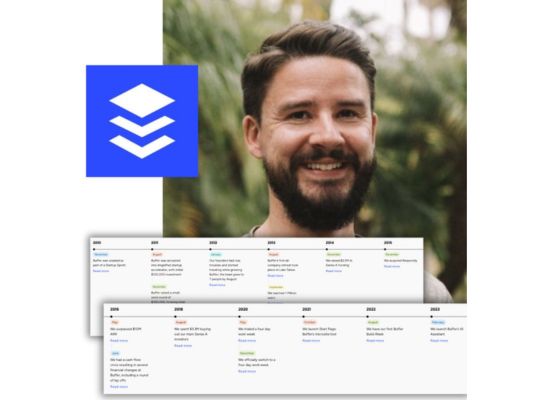
A side project can change your life.
That's not just motivational talk. It's exactly what happened to Joel Gascoigne in 2010.
He had a simple problem: scheduling tweets was annoying. So he decided to build something better.
Today, Buffer has over 140,000 customers and generates millions in revenue - all while staying bootstrapped.
This isn't another "quit your job and build a startup" story. This is about smart decisions, patient growth, and building something that actually matters to people.
Here's how one frustrated developer turned a weekend project into a business that changed the social media industry.
The Problem That Started Everything
Joel wasn't trying to build a business. He was trying to solve his own problem.
In 2010, social media marketing was becoming important, but the tools were terrible. If you wanted to schedule tweets, you had to:
- Remember to post at optimal times
- Use clunky, expensive enterprise tools
- Or manually post everything yourself
Sound familiar? Every successful side project starts with personal frustration.
Joel thought: "There has to be a better way to schedule social media posts."
But here's what makes this story different: Instead of immediately building the solution, Joel did something most developers skip.
He validated the idea first.
The Landing Page That Changed Everything
Before writing a single line of code, Joel built a landing page.
This wasn't just any landing page. It was genius:
- Explained the problem clearly
- Showed how Buffer would solve it
- Included pricing (even though the product didn't exist)
- Asked people to sign up for early access
Most developers would start coding immediately. Joel started with validation.
The results? People signed up. They were willing to pay. They left feedback about what they needed.
This single decision saved Joel months of building the wrong thing.
Why This Approach Works
Building first is expensive. Validating first is cheap.
Joel's landing page cost him:
- A few hours of design work
- Maybe $10 for hosting
- Zero development time
If he had built first:
- Weeks of coding
- Hundreds of hours invested
- Risk of building something nobody wanted
The landing page proved demand existed before Joel invested serious time.
Building the MVP: 7 Weeks to Launch
With validation in hand, Joel built fast.
Seven weeks later, Buffer was live.
This wasn't a perfect product. It was a Minimum Viable Product that did one thing well: schedule social media posts.
What Joel included in the MVP:
- Simple tweet scheduling
- Basic analytics
- Clean, easy-to-use interface
- Payment system (because he proved people would pay)
What he didn't include:
- Advanced features
- Multiple social networks
- Complex analytics
- Enterprise tools
The lesson: Start with the core problem. Add features based on user feedback, not assumptions.
The Bootstrap Decision That Defined Everything
In 2011, Joel made a choice that would define Buffer's entire future.
He chose customer-funded growth over venture capital.
While other startups were chasing investors, Joel focused on customers. He made sure Buffer was profitable from day one.
Why this mattered:
- No pressure from investors to grow at all costs
- Freedom to make decisions based on what's best for users
- Sustainable growth that could last decades
- Control over the company's direction and values
Customer-funded growth meant:
- Every feature was driven by paying customers
- Revenue came from solving real problems
- The business had to be profitable to survive
- Growth was sustainable, not artificial
This wasn't the easy path. But it was the right path.
The Power of Radical Transparency
In 2013, Joel did something that seemed crazy: he made Buffer completely transparent.
Buffer started sharing publicly:
- Employee salaries
- Revenue numbers
- Funding decisions
- Growth metrics
- Internal challenges
People thought Joel was insane. Why would you share sensitive business information?
But transparency became Buffer's superpower:
- Users trusted the company more
- Employees felt valued and respected
- The startup community saw Buffer as authentic
- Customers became advocates, not just users
Transparency built loyalty that money can't buy.
What Other Founders Can Learn
You don't have to share everything, but honesty builds trust.
Small ways to be more transparent:
- Share your building process on social media
- Be honest about challenges and setbacks
- Explain your pricing and decision-making
- Admit when you make mistakes
People buy from companies they trust. Transparency builds trust.
The Crisis That Tested Everything
In 2017, Buffer faced its biggest challenge.
The company had grown too fast. Cash flow problems emerged. Joel had to make an impossible decision:
Lay off 11% of the team.
This wasn't a failure. This was leadership.
Instead of hiding the problem or seeking emergency funding, Joel:
- Communicated honestly with the entire team
- Explained why the decision was necessary
- Focused on the company's long-term health
- Doubled down on profitability and stability
The layoffs were painful but necessary. They reinforced Buffer's commitment to sustainable growth over rapid expansion.
Tough decisions separate real leaders from wannabe entrepreneurs.
The Lessons Every Side Project Builder Needs
1. Validate Before You Build
Don't fall in love with your solution. Fall in love with the problem.
Joel's approach:
- Built a landing page first
- Tested demand before coding
- Got real user feedback early
- Proved people would pay
Your approach:
- Create a simple landing page explaining your idea
- Share it with potential users
- Collect email signups and feedback
- Build only after you prove demand exists
2. Bootstrap Smartly
Revenue is validation. Investment is just money.
Focus on making money early:
- Charge for your product from day one
- Start with paying customers, not free users
- Grow with customer revenue, not investor money
- Maintain control over your decisions
Even if you eventually take funding, prove the business works first.
3. Transparency Wins Trust
Be honest about your journey.
Share your process:
- Document your building journey
- Admit when things go wrong
- Explain your decisions
- Show your real progress, not just highlights
People connect with authentic stories, not perfect presentations.
4. Make Tough Decisions
Building a business means making hard choices.
Sometimes you have to:
- Say no to features customers want
- Charge more than competitors
- Pivot when something isn't working
- Make decisions that feel uncomfortable
Strong leadership means doing what's right for the long-term, even when it's hard.
Why This Story Matters for Your Side Project
Buffer's success isn't about being special. It's about being smart.
Joel didn't have:
- A revolutionary idea
- Special technical skills
- Tons of money to start
- A famous co-founder
- Insider connections
What Joel had:
- A real problem he wanted to solve
- Patience to validate before building
- Discipline to focus on profitability
- Courage to be transparent
- Wisdom to make tough decisions
These are skills you can develop. These are choices you can make.
What You Can Start This Week
Day 1-2: Find Your Problem
What frustrates you daily? Start there. Personal problems make the best side projects.
Day 3-4: Create Your Landing Page
Before you code anything, build a simple page explaining your solution. Include pricing.
Day 5-6: Test Demand
Share your landing page with potential users. Get real feedback. See if people sign up.
Day 7: Decide to Build or Pivot
If people are interested, start building your MVP. If not, try a different problem.
One week to validate. Seven weeks to build. Decades to grow.
The Real Secret to Buffer's Success
Buffer succeeded because Joel focused on the right things:
- Solving real problems
- Building sustainable revenue
- Treating customers and employees well
- Making decisions based on values, not just money
This isn't about building the next Buffer. This is about building something that matters to you and your users.
Your side project doesn't have to change the world. It just has to change someone's day for the better.
What problem will you solve first?
Joel Gascoigne started with frustrated tweets and built a company that millions of people trust. Your journey starts with whatever problem you face today.
The best time to start was yesterday. The second best time is now.
What's your Buffer story going to be?