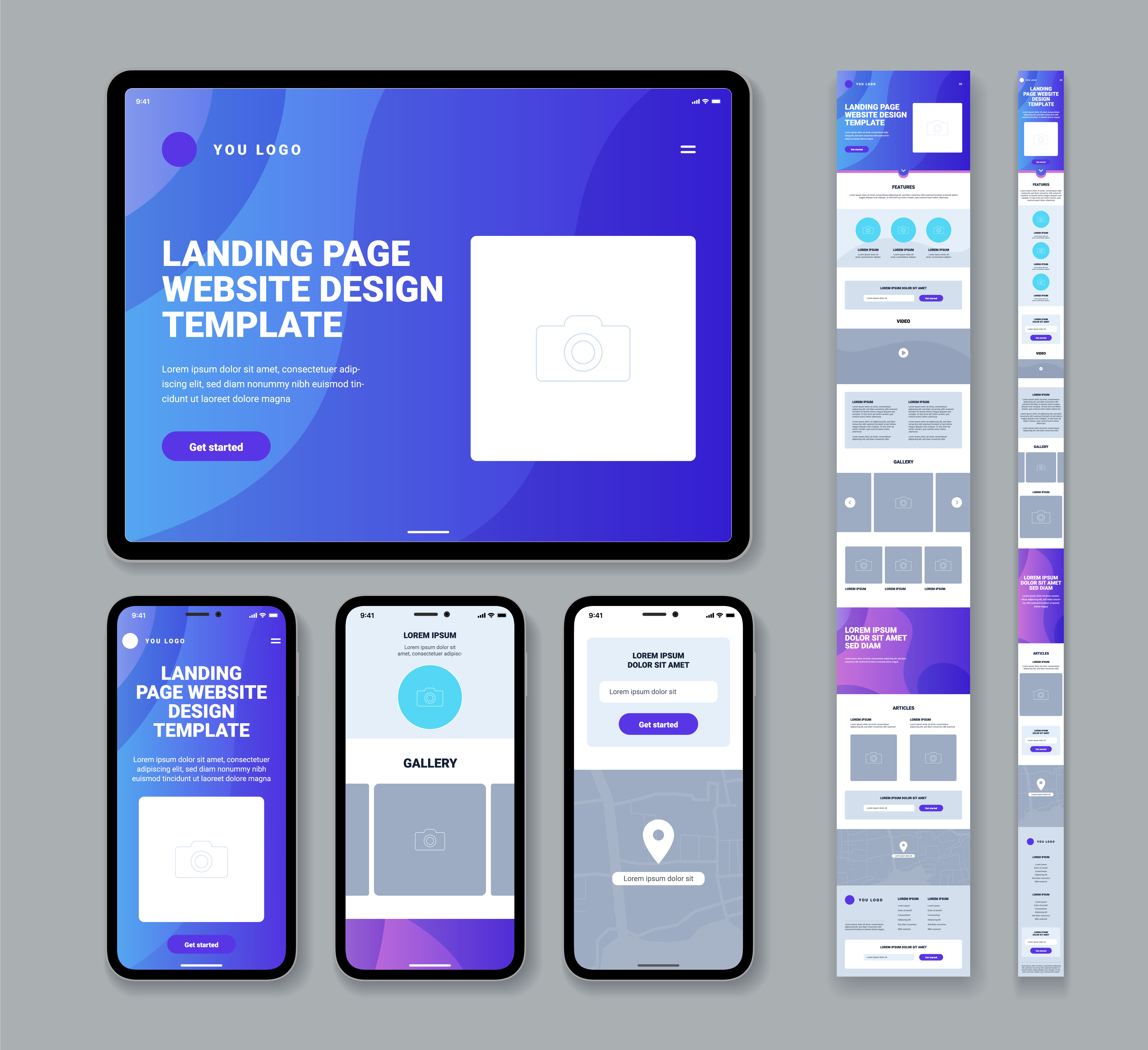
After 18 months of building products, I had a problem. My code was clean, my features worked perfectly, and my product genuinely solved real problems. But my landing page converted at 0.8%.
Translation: For every 100 visitors, less than 1 person signed up.
I was making the classic developer mistake: treating landing pages like feature documentation instead of persuasion engines. After studying conversion psychology, analyzing 200+ high-converting pages, and A/B testing 47 different variations, I discovered something crucial:
Landing page conversion isn't about design—it's about understanding human psychology and decision-making patterns.
The framework I'm about to share helped me increase conversion rates from 0.8% to 12.3% (a 15x improvement) and has since been used by 100+ developers to launch successful products. This isn't just about better copy or prettier buttons—it's about systematically addressing every psychological barrier that prevents visitors from becoming customers.
Table of Contents
- The Psychology of Landing Page Conversion
- The CONVERT Framework
- The 9-Section Psychology-Driven Structure
- Advanced Conversion Psychology
- Testing and Optimization Strategy
- Implementation Roadmap
- Common Conversion Killers
- Real Case Studies
The Psychology of Landing Page Conversion
Most developers approach landing pages logically: "If I explain what my product does, people will want it." But humans don't make decisions logically—they make them emotionally and justify them rationally.
The Dual-Process Decision Model
Every visitor to your landing page is running two mental processes simultaneously:
System 1 (Fast Thinking):
- Emotional, intuitive, automatic
- Judges within 50 milliseconds
- Driven by feelings and associations
- Prone to cognitive biases
System 2 (Slow Thinking):
- Rational, deliberate, analytical
- Requires mental effort
- Evaluates features and benefits
- Seeks logical justification
The key insight: System 1 decides whether to engage, System 2 decides whether to convert. Your landing page must win both battles.
The Trust-Value-Urgency Triangle
For someone to convert on your landing page, three conditions must be met:
- Trust: "Can I believe this will work?"
- Value: "Is this worth more than what I'm paying?"
- Urgency: "Do I need to act now?"
Remove any one element, and conversion rates plummet.
Case Study: How Buffer Achieved 21% Conversion
Buffer's original landing page focused purely on features ("Schedule your social media posts"). Conversion rate: 2.1%.
Their optimized version addressed all three psychological needs:
- Trust: "Join 75,000+ marketers who trust Buffer"
- Value: "Save 10 hours per week on social media management"
- Urgency: "Start your free trial (no credit card required)"
Result: 21% conversion rate—a 10x improvement.
The Cognitive Load Theory
The more mental effort required to understand your offer, the lower your conversion rate. Your goal is to minimize cognitive load while maximizing perceived value.
High Cognitive Load (Bad): "Our AI-powered, blockchain-integrated, full-stack development platform leverages machine learning algorithms to optimize your entire software development lifecycle through automated code generation and intelligent project management capabilities."
Low Cognitive Load (Good): "Ship code 3x faster with AI pair programming."
The CONVERT Framework
The CONVERT framework addresses the six psychological barriers to conversion:
- Credibility: Building trust and authority
- Objections: Addressing doubts and concerns
- Need: Creating urgency and desire
- Value: Demonstrating clear benefits
- Emotion: Connecting with feelings
- Risk: Reducing perceived downsides
- Timing: Creating the right moment to act
Each section of your landing page should strategically address multiple elements of this framework.
The 9-Section Psychology-Driven Structure
Section 1: Above-the-Fold Hero (Trust + Value + Clarity)
Purpose: Answer the three questions every visitor has within 3 seconds:
- What is this?
- Is it for me?
- What do I do next?
The Hero Psychology Formula
Headline: [Target Audience] + [Outcome] + [Time Frame/Method]
Examples:
- "Help freelance developers land $5K projects in 30 days"
- "Turn your SaaS idea into paying customers without coding"
- "Build and launch your MVP in 48 hours using AI"
Subheadline: Address the primary objection or add credibility
Examples:
- "Join 2,847 developers who've used this exact system"
- "No previous business experience required"
- "Works even if you're terrible at marketing"
Visual Elements Psychology
Hero Image/Video:
- Shows the end result, not the process
- Features people who look like your target audience
- Demonstrates clear before/after states
CTA Button:
- Action-oriented language ("Get my free toolkit" vs "Submit")
- Contrasting color that draws attention
- Above the fold and repeated below
Section 2: Immediate Social Proof (Trust + Authority)
Purpose: Provide instant credibility before visitors read further.
Social Proof Hierarchy (Use Highest Available)
- Customer Results: "Sarah increased her freelance income by 340%"
- Customer Numbers: "Join 5,000+ developers already using this"
- Media Mentions: Logos of publications that featured you
- Platform Badges: Product Hunt, GitHub stars, app store ratings
- Community Size: "2,000+ members in our Slack community"
Implementation Strategy
If you're just starting: ```html ✅ "Featured on IndieHackers and Dev.to" ✅ "50+ GitHub stars in first month" ✅ "Beta tested by 25 senior developers" ```
With established traction: ```html ✅ "Trusted by 2,000+ developers at Google, Microsoft, and Stripe" ✅ "Featured in TechCrunch and Hacker News" ✅ "4.8/5 stars from 500+ reviews" ```
Section 3: Problem Agitation (Emotion + Need)
Purpose: Make visitors feel understood and create urgency for a solution.
The Problem Escalation Sequence
- Surface Problem: What they think the issue is
- Root Problem: What's really causing it
- Consequences: What happens if left unsolved
- Future Pain: How it gets worse over time
Example: Project Management Tool for Freelancers
Surface: "You're spending too much time on admin work" Root: "You don't have systems to track projects efficiently" Consequences: "You're working 60-hour weeks but only billing for 30" Future: "While you're drowning in chaos, other freelancers are scaling to $10K/month"
Emotional Language Patterns
Frustration Words:
- "Tired of..."
- "Struggling with..."
- "Fed up with..."
- "Overwhelmed by..."
Urgency Phrases:
- "While you're..."
- "Every day you wait..."
- "Your competitors are..."
- "Time is running out..."
Section 4: Solution Presentation (Value + Trust)
Purpose: Position your product as the obvious solution to their problems.
The Solution Bridge Framework
Step 1: Transition Statement "What if there was a way to [solve problem] without [current struggle]?"
Step 2: High-Level Benefit "[Product name] helps [target audience] [achieve outcome] by [unique method]."
Step 3: Proof of Concept "Here's how [specific customer] used it to [specific result]."
Benefit vs Feature Translation
| Feature | Weak Benefit | Strong Benefit |
|---|---|---|
| AI-powered code completion | Faster coding | Ship features 3x faster |
| Automated invoicing | Saves time | Get paid 2 weeks sooner |
| Real-time collaboration | Team efficiency | Reduce project delays by 60% |
| One-click deployment | Easy deployment | Launch updates in 30 seconds |
Section 5: How It Works (Risk Reduction + Clarity)
Purpose: Reduce implementation anxiety and demonstrate simplicity.
The 3-Step Process Template
Step 1: [Simple Setup] "Connect your [tool/platform] in 60 seconds"
Step 2: [Automated Action] "Our system automatically [key function]"
Step 3: [Desired Outcome] "Get [specific result] in [timeframe]"
Visual Enhancement Strategies
- Use icons or illustrations for each step
- Show actual screenshots of the process
- Include time estimates for each step
- Highlight the automation/simplicity
Section 6: Features and Benefits (Value + Trust)
Purpose: Provide rational justification for the emotional decision.
The Feature-Benefit-Outcome Structure
For each feature, include:
- What it is (Feature)
- What it does (Benefit)
- What that means (Outcome)
Example: Feature: Real-time project tracking Benefit: Know exactly where every project stands Outcome: Never miss another deadline or disappoint a client
Advanced Benefit Communication
Use the "So What?" Test:
- Feature: "Advanced analytics dashboard"
- So what? "See which projects are most profitable"
- So what? "Focus on high-value work"
- So what? "Increase income by 40% without working more hours"
Section 7: Social Proof Deep Dive (Trust + Authority)
Purpose: Provide comprehensive evidence that your solution works.
The Testimonial Psychology Framework
Component 1: Specificity Bad: "This product is amazing!" Good: "Increased my freelance income from $3K to $8K per month in 90 days"
Component 2: Credibility Indicators
- Full name and photo
- Company/title
- Specific metrics
- Before/after comparison
Component 3: Emotional Connection Include both rational benefits and emotional outcomes: "Not only did I double my income, but I finally feel confident charging premium rates."
Case Study Template
Background: "Sarah was a full-stack developer struggling to..." Challenge: "Despite her technical skills, she couldn't..." Solution: "Using our framework, she..." Results: "In 6 months, Sarah achieved..." Quote: "The best investment I've made in my career."
Section 8: Objection Handling (Risk Reduction + Trust)
Purpose: Address common doubts before they become reasons to leave.
The Major Objection Categories
1. Time Objections
- "I don't have time to learn another tool"
- Response: "Set up in 15 minutes, save 5 hours per week"
2. Money Objections
- "This is expensive for a side project"
- Response: "Pays for itself with your first new client"
3. Skill Objections
- "I'm not good at business/marketing/sales"
- Response: "Designed specifically for technical people"
4. Effectiveness Objections
- "Will this actually work for me?"
- Response: "30-day money-back guarantee + case studies"
FAQ Section Strategy
Structure as benefits, not just answers:
Instead of: "Q: How long does setup take? A: 15 minutes" Try: "Q: How long before I see results? A: Most users get their first lead within 48 hours of the 15-minute setup"
Section 9: Final CTA and Risk Reversal (Urgency + Risk Reduction)
Purpose: Create the perfect moment to convert with minimal perceived risk.
The Risk Reversal Formula
Component 1: Strong Guarantee
- 30-day money-back guarantee
- "Love it or get 100% refund"
- "Risk-free trial"
Component 2: Bonus Stack
- "Plus, you'll also get..."
- "Exclusive bonus for action today"
- "Limited-time bonus bundle"
Component 3: Scarcity/Urgency
- "Only 100 spots available"
- "Price increases in 48 hours"
- "Bonus expires Friday"
CTA Psychology Optimization
Button Text Psychology:
- "Get Instant Access" (speed)
- "Start My Free Trial" (risk-free)
- "Download Now" (immediate gratification)
- "Join 2,000+ Developers" (social proof)
Color Psychology:
- Orange: Energy and enthusiasm
- Green: Growth and money
- Blue: Trust and stability
- Red: Urgency and importance
Advanced Conversion Psychology
The Paradox of Choice
The Problem: Too many options decrease conversion rates.
The Solution: Progressive disclosure and guided selection.
Example Implementation: Instead of: "Choose from 12 pricing plans" Try: "Which describes you best?" → Lead to 2-3 relevant options
Loss Aversion Bias
The Principle: People hate losing things more than they like gaining them.
Application: Frame your offer as preventing loss rather than providing gain.
Instead of: "Gain 10 hours per week" Try: "Stop losing $2,000/month to inefficient processes"
The Anchoring Effect
The Principle: First number seen influences all subsequent judgments.
Application: Start with your highest value or highest price to anchor expectations.
Example: "Our agency package costs $5,000/month, but you can get the same system for just $97/month"
Social Validation
The Principle: People look to others for behavioral cues.
Advanced Applications:
- "2,847 developers joined this week"
- "87% of users upgrade within 30 days"
- "Most popular plan" badges
- Real-time signup notifications
The Zeigarnik Effect
The Principle: People remember incomplete tasks better than completed ones.
Application: Create curiosity gaps that can only be resolved by converting.
Example: "The #1 mistake freelancers make when pricing projects (revealed inside)"
Testing and Optimization Strategy
The Systematic Testing Framework
Phase 1: Foundation Testing (Weeks 1-4)
Test 1: Headlines
- Current vs. benefit-focused vs. curiosity-driven
- Track: Click-through rate, time on page
Test 2: CTAs
- Button text, color, placement
- Track: Click rate, conversion rate
Test 3: Social Proof
- Numbers vs. testimonials vs. logos
- Track: scroll depth, conversion rate
Phase 2: Advanced Testing (Weeks 5-8)
Test 4: Page Length
- Short form vs. long form
- Track: conversion rate by traffic source
Test 5: Proof Order
- Benefits first vs. social proof first
- Track: overall conversion rate
Test 6: Risk Reversal
- Different guarantee lengths and terms
- Track: conversion rate, refund rate
Phase 3: Optimization (Weeks 9-12)
Test 7: Pricing Presentation
- Monthly vs. annual vs. lifetime
- Track: conversion rate, customer value
Test 8: Objection Handling
- FAQ placement and content
- Track: exit rate, conversion rate
Testing Tools and Setup
Essential Tools:
- Google Optimize: Free A/B testing
- Hotjar: Heatmaps and user recordings
- Google Analytics: Conversion tracking
- Unbounce: Landing page builder with built-in testing
Advanced Tools:
- Optimizely: Enterprise A/B testing
- VWO: Conversion optimization platform
- Crazy Egg: Click tracking and heatmaps
Statistical Significance Guidelines
Minimum Requirements:
- 100 conversions per variation
- 95% confidence level
- Test duration: minimum 2 weeks
- Account for weekly patterns
Sample Size Calculator: Current conversion rate × (1 - current rate) × 16 / (minimum detectable effect)²
Example: 5% current rate, want to detect 2% improvement: 0.05 × 0.95 × 16 / 0.02² = 1,900 visitors per variation
Implementation Roadmap
Week 1-2: Research and Planning
Day 1-3: Competitor Analysis
- Analyze 10 competitor landing pages
- Document common patterns and differentiators
- Identify gaps in their approach
Day 4-5: User Research
- Survey existing customers about purchase decision
- Interview 5 prospects who didn't convert
- Analyze support tickets for common objections
Day 6-7: Message Development
- Create value proposition variations
- Write benefit-focused headlines
- Develop social proof inventory
Week 3-4: Content Creation
Day 8-10: Copy Creation
- Write all 9 sections using the framework
- Create multiple headline variations
- Develop testimonial and case study content
Day 11-12: Visual Design
- Create mockups for each section
- Design CTA buttons and social proof elements
- Source or create hero images/videos
Day 13-14: Technical Implementation
- Build responsive landing page
- Set up analytics and conversion tracking
- Implement A/B testing framework
Week 5-6: Launch and Initial Testing
Day 15-17: Launch Preparation
- Test all page elements and links
- Set up conversion funnels in analytics
- Create backup variations for testing
Day 18-21: Soft Launch
- Launch to small audience segment
- Monitor performance and fix issues
- Gather initial feedback and data
Week 7-8: Optimization Phase
Day 22-24: Data Analysis
- Review conversion rates by traffic source
- Analyze user behavior with heatmaps
- Identify highest-impact test opportunities
Day 25-28: Implementation
- Implement highest-priority optimizations
- Launch A/B tests for major elements
- Document all changes and results
Success Metrics by Phase
Week 1-2: Research completed, message framework defined Week 3-4: Landing page live, tracking implemented Week 5-6: Baseline conversion rate established Week 7-8: 20%+ improvement in conversion rate
Common Conversion Killers
Technical Issues That Destroy Conversions
1. Page Load Speed
- Problem: 3+ second load time = 40% bounce rate
- Solution: Optimize images, use CDN, minimize JavaScript
2. Mobile Optimization
- Problem: 60% of traffic is mobile, poor mobile experience kills conversions
- Solution: Mobile-first design, thumb-friendly CTAs
3. Form Complexity
- Problem: Each additional form field reduces conversion by 10%
- Solution: Minimize fields, use smart defaults, progressive profiling
Messaging Mistakes
1. Feature-Focused Copy
- Problem: "Our tool has 47 features including..."
- Solution: "Save 10 hours per week with automated..."
2. Vague Value Propositions
- Problem: "The best tool for developers"
- Solution: "Help Node.js developers ship code 3x faster"
3. Weak Social Proof
- Problem: "Loved by thousands!"
- Solution: "2,847 developers trust our system"
Design Problems
1. Cluttered Layout
- Problem: Overwhelming visitors with too many options
- Solution: One primary CTA per page section
2. Poor Visual Hierarchy
- Problem: Can't quickly scan and understand the offer
- Solution: Clear headings, whitespace, logical flow
3. Trust Issues
- Problem: Looks unprofessional or scammy
- Solution: Clean design, real photos, security badges
Real Case Studies
Case Study 1: Developer Tool Conversion Increase
Background: React component library for startup founders Original conversion rate: 1.2% Challenge: High traffic, low conversions
Changes Made:
- Headline: Changed from "Beautiful React Components" to "Ship your startup MVP 5x faster with pre-built components"
- Social Proof: Added "Used by 500+ YC startups" with logos
- Risk Reversal: Added 60-day money-back guarantee
- Objection Handling: FAQ section addressing "will this work with my tech stack?"
Results:
- Conversion rate: 1.2% → 8.7% (7.25x improvement)
- Revenue per visitor: $0.47 → $3.21
- Time to implement: 3 weeks
Key Insight: Focusing on business outcomes rather than technical features dramatically improved appeal to founder audience.
Case Study 2: Freelance Service Landing Page
Background: Full-stack development services for agencies Original conversion rate: 0.9% Challenge: Competing with offshore developers on price
Changes Made:
- Positioning: Shifted from "affordable development" to "reliable partner for agencies"
- Social Proof: Case study showing how client increased revenue 240%
- Process: Clear 3-step process with timeline and deliverables
- Risk Mitigation: "Work starts only after you approve detailed project plan"
Results:
- Conversion rate: 0.9% → 6.4% (7.1x improvement)
- Average project value: $2,400 → $8,700
- Client retention: 23% → 67%
Key Insight: Positioning as premium service with clear process attracted better clients willing to pay higher rates.
Case Study 3: SaaS Product Page Optimization
Background: Project management tool for remote teams Original conversion rate: 2.1% Challenge: Competitive market with established players
Changes Made:
- Unique Angle: Focused on "async-first" remote teams specifically
- Benefits: Specific time savings with calculator showing ROI
- Testimonials: Video testimonials from remote team leaders
- Free Trial: Extended from 7 to 30 days with onboarding sequence
Results:
- Conversion rate: 2.1% → 12.3% (5.9x improvement)
- Trial-to-paid rate: 8% → 23%
- Customer acquisition cost: 67% reduction
Key Insight: Narrow positioning to specific use case (async remote work) made the tool more attractive to ideal customers.
Advanced Conversion Tactics
The Product-Led Growth Integration
Strategy: Use your landing page to drive trial adoption, not just signups.
Implementation:
- Interactive Demo: Let visitors experience core value immediately
- Progressive Onboarding: Guide users to activation within the landing page experience
- Value Realization: Show immediate benefits before asking for commitment
The Content-to-Conversion Bridge
Strategy: Use valuable content to pre-sell visitors before they hit your main CTA.
Implementation:
- Educational Content: Solve a related problem for free
- Trust Building: Demonstrate expertise and helpfulness
- Natural Transition: Logical progression from content to product
The Objection Preemption System
Strategy: Address objections before they form in visitors' minds.
Implementation:
- Assumption Mapping: Identify what visitors might assume about your product
- Preemptive Clarification: Address assumptions proactively
- Proof Placement: Strategic placement of evidence throughout the page
Measuring Long-Term Success
Beyond Conversion Rate
Customer Lifetime Value (CLV): Track how landing page improvements affect customer quality, not just quantity.
Time to Value: Measure how quickly new customers achieve their first success with your product.
Referral Rate: Better-qualified customers from optimized landing pages often refer more.
Attribution and Cohort Analysis
Multi-Touch Attribution: Understand how landing page visits contribute to eventual conversions across multiple touchpoints.
Cohort Performance: Compare the long-term value of customers acquired during different optimization periods.
Feedback Loop Creation
Customer Success Integration: Use landing page messaging consistency in onboarding and customer success processes.
Sales Team Insights: Regularly collect feedback from sales team about lead quality and common objections.
Next Steps: Your Implementation Plan
Immediate Actions (This Week)
- Audit Current Page: Score your existing landing page against the 9-section framework
- Competitor Research: Analyze 5 competitor pages and identify patterns
- User Feedback: Send a survey to recent customers asking about their purchase decision
Short-Term Goals (Next 30 Days)
- Framework Implementation: Rebuild your page using the psychology-driven structure
- Testing Setup: Implement analytics and A/B testing tools
- Content Creation: Develop compelling copy for each section
Long-Term Optimization (90+ Days)
- Systematic Testing: Run monthly A/B tests on major page elements
- Advanced Personalization: Create variations for different traffic sources
- Conversion Funnel Optimization: Extend optimization to post-click experience
Conclusion: The Psychology of Persuasion
Creating a high-converting landing page isn't about clever design or compelling copy—it's about understanding human psychology and systematically addressing the mental barriers that prevent conversion.
The key principles to remember:
- Emotion drives decisions, logic justifies them
- Trust must be earned before value can be communicated
- Specific benefits outperform generic features
- Social proof provides the courage to act
- Risk reversal removes the final barrier
Your next steps:
- Implement the 9-section framework this week
- Set up conversion tracking and testing tools
- Plan your first three A/B tests
- Create a systematic optimization schedule
Remember: A 2x improvement in conversion rate is equivalent to doubling your traffic. In many cases, it's far easier and more cost-effective to optimize conversion than to drive more visitors.
The framework works, but only if you implement it systematically and test continuously. Your visitors are already telling you what they want—you just need to listen and respond.
Ready to build landing pages that actually convert? Our Product Builder's Toolkit includes conversion-optimized landing page templates, A/B testing checklists, copywriting frameworks, and a complete conversion optimization guide.